

Blog
Prompt Engineering vs Context Engineering: A Practical Guide to Reliable AI Workflows

Prompt engineering vs context engineering is one of the most useful distinctions for anyone building dependable AI workflows. Prompt engineering focuses on how an instruction is written. Context engineering focuses on everything the model receives around that instruction: the right documents, examples, tools, memory, constraints, permissions, and evaluation signals.
The distinction matters because a beautifully written prompt can still produce a weak answer when the model has incomplete evidence, conflicting instructions, stale information, or no reliable way to verify its work. Conversely, a simple instruction can perform remarkably well when the surrounding context is selected, structured, and governed carefully.
This long-form guide explains the difference, shows how the two practices work together, and provides a practical framework for designing AI systems that are clearer, more accurate, safer, and easier to improve.
What prompt engineering actually solves
Prompt engineering is the disciplined design of instructions for an AI model. It turns a vague request into a task with a clear objective, relevant background, boundaries, audience, output format, and quality criteria. The best prompts do not try to control every word. They reduce ambiguity and make the desired result easy to recognise.
A practical prompt usually answers several questions before the model begins:
- What job should the model perform?
- Who will use the result and what do they already know?
- Which facts, files, examples, or definitions should guide the answer?
- What should the model avoid, and what should it do when information is missing?
- What format makes the result easiest to review or reuse?
- How will a human decide whether the output is good enough?
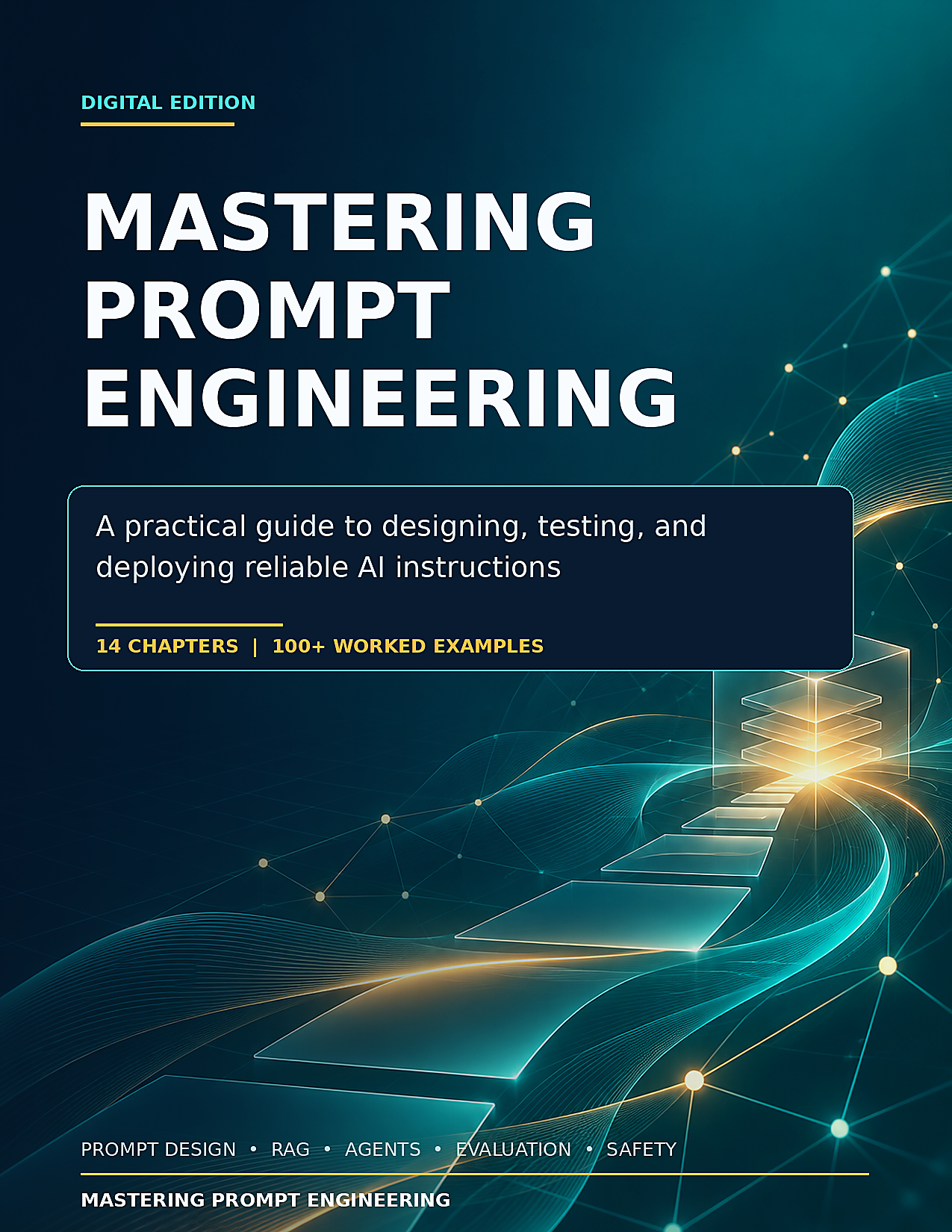
These questions are central to Mastering Prompt Engineering, the DigiSak guide that develops reusable prompt patterns for writing, research, coding, data analysis, and AI-assisted operations.
What context engineering adds
Context engineering treats the complete input environment as a system. It asks whether the model has the right evidence at the right moment, whether that evidence is current, whether sources conflict, whether tools are available, and whether the model is allowed to use them. It also considers memory, retrieval, conversation history, schemas, user roles, and the checks that happen after generation.
In a production workflow, the prompt may be only one part of the request. The surrounding context can include a system policy, a customer profile, a retrieved knowledge-base article, a database record, a list of available functions, a structured output schema, and a requirement to cite or escalate uncertain claims. If any of these parts are missing or poorly designed, the prompt cannot compensate by itself.
Context engineering is therefore closer to information architecture and systems design than to copywriting. It connects the model to the information and actions needed to complete a task responsibly.
Prompt engineering vs context engineering: the difference in one view
| Dimension | Prompt engineering | Context engineering |
|---|---|---|
| Main question | How should the instruction be expressed? | What should the model know, access, and follow? |
| Primary object | Instructions, examples, and output requirements | Sources, memory, tools, permissions, schemas, and evaluation |
| Typical failure | Ambiguous or incomplete request | Missing, stale, conflicting, or unauthorised context |
| Best improvement | Clarify the task and quality bar | Improve retrieval, structure, access, and verification |
| Success signal | A useful answer for a defined input | A reliable workflow across changing inputs |
The two practices are complementary. Prompt engineering improves the communication layer; context engineering improves the information and control layer. Strong AI products need both.
Why better prompts cannot fix bad context
Imagine asking an assistant to prepare a customer refund response. The instruction says: “Write a helpful, concise reply and follow our refund policy.” The prompt sounds reasonable, but the model still needs the current policy, the customer’s order status, the delivery date, the jurisdiction, the refund eligibility, and the support team’s escalation rules.
If the model receives an outdated policy or a customer record belonging to another order, a longer prompt will not solve the problem. It may even make the answer sound more confident while increasing the risk of a wrong decision. The correct intervention is to improve data selection, source priority, access control, and verification.
The same pattern appears in research. Asking an AI system to “be accurate” does not replace supplying the relevant papers, publication dates, definitions, and a method for identifying unsupported claims. The quality of the answer depends on the quality and traceability of the context.
The six layers of a reliable AI context
A useful way to design context is to separate it into layers. Each layer answers a different operational question and can be tested independently.
1. Task context
Task context explains the objective, audience, scope, and desired outcome. It should distinguish the immediate request from the broader business or learning goal. For example, “summarise this report” is weaker than “prepare a 300-word executive brief that identifies the three decisions supported by the report and labels any unresolved evidence.”
2. Domain context
Domain context supplies definitions, policies, terminology, examples, and assumptions. It prevents the model from filling gaps with generic knowledge that may not match the organisation, course, product, or industry. Domain context should be versioned when it changes frequently.
3. Evidence context
Evidence context consists of the documents, records, data, citations, or retrieved passages that support the answer. A strong workflow identifies where each claim came from and makes it possible for a reviewer to inspect the source. Retrieval should favour relevance, recency, authority, and diversity rather than simply returning the largest number of passages.
4. Action context
Action context describes the tools the model can call and the conditions under which it may call them. A support agent might be allowed to search an order, draft a response, and create a ticket, but not issue a refund without approval. Explicit tool descriptions and permission boundaries reduce accidental actions.
5. Conversation and memory context
Conversation context helps the model understand what has already been decided. Memory should be selective rather than unlimited. Retaining every previous message can introduce irrelevant or contradictory instructions, while retaining nothing forces the user to repeat important information. Store only useful, authorised, and reviewable memory.
6. Evaluation context
Evaluation context tells the model and the surrounding system what quality means. It can include a checklist, a schema, examples of acceptable and unacceptable answers, confidence thresholds, citation rules, and escalation conditions. This layer turns a one-time generation into a controlled workflow.
How retrieval changes the prompt
Retrieval-augmented generation is often described as a way to give an AI system access to external knowledge. In practice, retrieval changes the prompt design itself. The application must decide what to search, how to split documents, how to rank passages, how many sources to include, and how to show them to the model.
Short, relevant passages are usually more useful than a large undifferentiated document. Each passage should retain enough surrounding meaning to prevent misinterpretation, and metadata such as title, date, author, department, product version, or access level can help the system select the correct evidence.
Retrieval should also handle the “no answer” case. If the knowledge base does not contain enough evidence, the system should say so, ask a clarifying question, or route the task to a human. A workflow that always generates a confident answer is not reliable; it is merely difficult to audit.
How to write prompts that work with context
A context-aware prompt should tell the model how to use the material it receives. It can specify that supplied documents are the primary source, that unsupported claims must be marked as uncertain, that conflicting documents should be reported, and that the answer should cite the relevant source identifiers.
A practical template looks like this:
- Objective: describe the decision, explanation, or artefact required.
- Audience: identify the reader and the level of detail they need.
- Source rule: explain which supplied materials take priority.
- Reasoning boundary: ask for concise conclusions, assumptions, and uncertainty rather than hidden chain-of-thought.
- Output contract: define headings, fields, length, and formatting.
- Safety rule: specify when the system must ask, refuse, or escalate.
This structure makes the prompt shorter and more useful because it gives the model a clear operating environment instead of a long list of decorative instructions.
Examples across real workflows
Research and fact-checking
For a research brief, prompt engineering defines the required structure: claim, evidence, counterpoint, confidence, and open question. Context engineering determines which papers, official records, datasets, and dates are retrieved. It also decides whether the user is allowed to access each source and whether the final answer should include links or a review queue.
Software development
For code assistance, the prompt can request a plan, assumptions, tests, and a patch. Context engineering supplies the repository conventions, runtime version, relevant files, existing tests, error logs, and security policy. A model that sees only a small code snippet may propose an elegant change that breaks an unseen interface. A context-aware system narrows that risk.
Customer support
A support workflow combines the customer’s request with the correct account record, product version, service-level agreement, refund policy, and escalation route. Prompt engineering controls tone and output format. Context engineering controls the facts and permissions. Both are necessary before the system should be trusted to draft a response.
Education and tutoring
An educational assistant should know the learner’s level, the course objectives, the allowed resources, and the difference between giving a hint and giving a final answer. The prompt can ask for a Socratic explanation, while the context supplies the lesson material and previous misconceptions. This creates a more useful learning experience than a generic answer engine.
Small-business operations
A small business may want an AI workflow for lead qualification, meeting notes, inventory questions, or content planning. The system needs a consistent vocabulary, the latest offers, the business hours, the approved claims, and a clear boundary between drafting and sending. The DigiSak AI agents guide explores how to build these workflows with practical controls.
A step-by-step design process
Step 1: Define the decision, not only the message
Start by asking what the output will be used for. Is it a draft, a recommendation, a classification, a record update, or a decision support document? The answer determines the required evidence, risk level, and review process.
Step 2: Map the minimum necessary context
List the information required to complete the task and remove everything that is irrelevant or sensitive. More context is not automatically better. Irrelevant material increases distraction, cost, and the chance of conflicting instructions.
Step 3: Establish source priority
Decide what happens when two sources disagree. A current policy may outrank an old handbook; a signed customer record may outrank an informal note. Source priority should be explicit and testable.
Step 4: Design the output contract
Use a schema, headings, or a checklist that makes the answer easy to validate. Structured outputs are especially useful when the result flows into another system. Include a field for uncertainty or missing evidence when the task requires judgement.
Step 5: Add the human decision points
Identify the actions that require approval. A model can draft a refund explanation while a human approves the transaction. It can propose a code change while automated tests and a reviewer decide whether it is merged. Human review should be placed where it reduces meaningful risk, not added as a vague slogan.
Step 6: Test representative failure cases
Test incomplete inputs, contradictory sources, outdated documents, unusual users, prompt injection attempts, ambiguous language, and unavailable tools. A workflow that succeeds only on the ideal example is not ready for regular use.
Step 7: Monitor and improve
Track failure categories, not only overall satisfaction. Useful signals include unsupported claims, missing citations, wrong tool selection, formatting errors, unnecessary escalation, and latency. Each failure should lead to a change in the prompt, context, retrieval, tool design, or evaluation rule.
Common mistakes to avoid
- Prompt ornament: adding dramatic role instructions while leaving the task and evidence unclear.
- Context dumping: sending every available document instead of selecting the relevant material.
- Unversioned knowledge: mixing current and outdated policies without dates or priorities.
- Silent permissions: allowing a tool to act without clearly defining authorisation and approval.
- Format without evaluation: requesting JSON or a table without checking whether the values are correct.
- One-example testing: assuming that a successful demonstration proves general reliability.
- Memory without governance: retaining personal or business information without a purpose, consent, or review path.
Measuring quality beyond “it sounds good”
AI output can be fluent and still be wrong. Measure the dimensions that matter for the workflow: factual accuracy, source coverage, completeness, relevance, consistency, actionability, safety, and user effort. Different tasks require different weights. A brainstorming assistant may prioritise novelty and variety, while a compliance summary prioritises traceability and cautious wording.
Use a small evaluation set that represents real inputs. Label expected outcomes where possible, compare versions of the workflow, and record examples of failure. Human review remains valuable, but reviewers need clear criteria and should not be asked to judge an answer only by style.
For higher-risk workflows, combine automated checks with approval gates. A schema validator can catch missing fields, a citation checker can identify unsupported claims, and a policy filter can block prohibited actions. These controls do not replace judgement; they create a safer baseline.
Security and privacy considerations
Context engineering creates a new responsibility: the application decides what information is made available to the model. Apply least privilege. Retrieve only the records needed for the current task, redact unnecessary personal data, separate tenants, and log access in a way that supports investigation without exposing more information.
Prompt injection is another reason to separate instructions from untrusted content. Documents, webpages, and messages may contain text that tries to override the system’s rules. Treat retrieved material as evidence, not as authority. The system should distinguish trusted instructions, user input, tool results, and external content.
For a broader foundation, the NIST AI Risk Management Framework provides a useful reference for identifying, measuring, and managing AI-related risks. Apply the principles to the scale and sensitivity of your own workflow.
When prompt engineering is enough
Not every task needs a complex context pipeline. A personal brainstorming session, a rewrite of text already supplied by the user, or a simple explanation may be handled with a well-designed prompt and a clear review step. Complexity should follow risk and variability.
Prompt engineering is often enough when the source material is already present, the task does not require external facts, no tools are called, and the result will be reviewed before use. In these cases, focus on clarity, audience, examples, and output format.
When context engineering becomes essential
Context engineering becomes more important when the task depends on changing information, multiple sources, user-specific permissions, external tools, memory, or actions with real consequences. It is also essential when a workflow must operate consistently across many users and inputs.
As the workflow grows, treat prompts as versioned components rather than secret recipes. Store the prompt, source-selection rules, tool definitions, evaluation set, and change notes together. This makes improvement measurable and allows another practitioner to understand why the system behaves as it does.
A practical architecture for a small team
A small team can begin without building a complicated platform. Create a task brief that defines the goal and risk. Maintain a curated folder of current reference documents with owners and dates. Use a retrieval step that returns only relevant passages. Ask the model for a structured draft with citations and uncertainty. Add a human review checklist. Record failures in a shared log and update the workflow in small, testable changes.
For tool use, create a separate permission matrix. List every action, the data it can access, the person or role allowed to approve it, and the evidence required before execution. Start with read-only tools and drafting. Add write actions only after the team has reliable monitoring and rollback procedures.
A reusable checklist
- Define the user, task, outcome, and risk level.
- Identify the minimum necessary information.
- Separate trusted instructions from untrusted content.
- Give sources titles, dates, and priority rules.
- Write a concise prompt with an explicit output contract.
- Describe tool permissions and approval points.
- Require uncertainty or escalation when evidence is incomplete.
- Test ordinary cases and realistic failure cases.
- Evaluate accuracy, traceability, usefulness, and safety.
- Version the workflow and document what changed.
Frequently asked questions
Is context engineering replacing prompt engineering?
No. Prompt engineering remains important because the instruction communicates the task and quality bar. Context engineering expands the scope to include the information, tools, memory, permissions, and checks that surround the prompt. Reliable systems need both.
Does more context always improve an AI answer?
No. Irrelevant, duplicated, contradictory, or outdated context can make an answer worse. The goal is useful context, not maximum context. Select, rank, label, and limit the material provided.
Should I use a very long prompt?
Usually not. A long prompt can be helpful when it contains necessary policy or examples, but length is not a substitute for structure. Keep instructions clear, modular, and connected to the task. Move stable knowledge into curated context or retrieval when appropriate.
How can I reduce hallucinations?
Use authoritative sources, require the model to distinguish evidence from inference, add a “not enough information” path, test unsupported questions, and review high-impact results. No single prompt can guarantee accuracy.
What should I learn first?
Begin with prompt fundamentals: clear objectives, context, constraints, examples, output formats, and evaluation. Then learn retrieval, structured outputs, tool calling, permissions, monitoring, and responsible deployment. The DigiSak prompt engineering ebook is designed as a practical starting point.
Final perspective
The most effective AI workflows are not built from clever wording alone. They are designed as systems that combine an understandable instruction with relevant evidence, controlled tools, sensible memory, explicit permissions, and measurable evaluation.
Use prompt engineering to communicate the job. Use context engineering to make sure the system has what it needs to do that job responsibly. When the two practices are developed together, AI becomes easier to review, easier to improve, and much more valuable in everyday work.
Start small, measure the real failure modes, and build context that earns trust one workflow at a time.
Three detailed case studies
Case study one: an internal knowledge assistant
A growing company wants employees to ask questions about onboarding, benefits, security procedures, and internal tools. The first version uses a large prompt that says, “Answer from company knowledge and be helpful.” Employees like the tone, but the system sometimes uses an old policy and cannot explain where an answer came from.
A better prompt engineering approach defines the audience, asks for a short answer followed by source references, and requires the assistant to say when no current policy is available. The context engineering work is more substantial: documents are tagged by department, owner, effective date, and access level; outdated versions are excluded; retrieval returns a small set of relevant passages; and the answer includes the policy date. The result is not merely more fluent. It is easier for employees to verify and easier for the company to maintain.
Case study two: an AI application assistant
An applicant uses AI to understand a job description, adapt a CV, and prepare interview questions. A generic prompt may produce impressive but inaccurate claims. The assistant should instead receive a verified profile containing projects, tools, achievements, dates, and limitations. The prompt should explicitly forbid inventing experience and ask for an evidence matrix linking every suggested claim to the profile.
Here, context engineering protects authenticity. The system can use the job description as an untrusted external document, the candidate profile as the source of truth, and a separate checklist to flag missing evidence. The assistant can draft language, but the person remains responsible for approving every claim.
Case study three: a small-business content workflow
A small business wants to turn one product idea into a blog article, email, social post, and short video script. Prompt engineering can define the brand voice and output formats. Context engineering supplies the product facts, audience segments, approved claims, price, availability, visual assets, and links. It also creates a rule that anything involving a promise, discount, or sensitive category must be reviewed before publishing.
Without this context, the model may invent a feature or use an expired offer. With it, the workflow becomes a controlled content system. The business can reuse the same structure for new products while updating only the source material.
Implementation patterns that scale
Pattern 1: separate stable policy from changing evidence
Keep stable instructions, such as safety boundaries and output rules, separate from dynamic information, such as prices, inventory, case records, and current policies. This makes it easier to update the evidence without rewriting the whole prompt and reduces the chance that temporary facts become permanent instructions.
Pattern 2: use typed context blocks
Label each context block clearly: trusted policy, user-provided facts, retrieved source, tool result, previous decision, or unverified external content. Labels help both the model and the surrounding application reason about authority. They also make logs easier to inspect.
Pattern 3: let the system ask for missing context
A reliable assistant should not guess when a required field is missing. Define a small set of clarifying questions and let the workflow pause safely. Asking one precise question is often more efficient than generating a long answer that must later be corrected.
Pattern 4: design for graceful degradation
Tools fail, documents become unavailable, and retrieval sometimes returns nothing useful. Define fallback behaviour: provide a limited answer, explain the limitation, create a review task, or route the user to a human. A system that fails openly is safer than one that hides a missing dependency behind confident language.
Pattern 5: make evaluation part of the product
Do not wait for complaints before testing. Maintain a small evaluation set that covers important users, typical requests, edge cases, and known past failures. Run it when the prompt, retrieval method, model, tool, or source collection changes. Keep the expected criteria visible to the team.
Metrics for context quality
Context quality can be measured directly. Track retrieval precision: how many returned passages are actually useful? Track coverage: did the retrieved material contain the evidence needed for the answer? Track freshness: was the source current? Track conflict rate: how often did sources disagree? Track permission accuracy: did the workflow expose only authorised information?
Also track outcome metrics. Did the user complete the task? Did the reviewer have to correct the answer? Did the system escalate too often or not enough? Did the workflow reduce time without increasing risk? These measures connect technical changes to real value.
For prompt quality, compare clarity, instruction-following, formatting accuracy, and error categories across versions. Treat the metrics as signals, not as a single score. A small improvement in accuracy may be more valuable than a large improvement in style.
How to document an AI workflow
Every production workflow should have a short technical note. Include the purpose, users, data sources, prompt version, retrieval rules, available tools, permission model, evaluation set, known limitations, human approval points, and rollback process. Record the date and owner for each important source.
This documentation is useful when a workflow changes owners, when a policy changes, when an incident must be investigated, or when the team wants to reuse a successful design. It also prevents the common problem of an AI process becoming dependent on one person’s memory.
Keep examples of good and bad outputs, but remove unnecessary personal or confidential information. A sanitized failure example is often more useful than a polished demonstration because it shows what the system must learn to avoid.
How teams can divide responsibilities
Prompt engineering may be led by a domain expert, writer, analyst, or developer who understands the task. Context engineering usually requires collaboration among that person, a data or knowledge owner, a security reviewer, and someone responsible for product quality. The roles do not need to be separate full-time jobs, but the responsibilities should be visible.
The domain owner decides what a correct answer means. The knowledge owner maintains source quality. The technical owner manages retrieval, tools, schemas, and monitoring. The security or governance reviewer checks privacy, permissions, and high-impact risks. Together they create a workflow that can be trusted beyond a single demonstration.
A 30-day improvement plan
- Days 1–5: choose one workflow and define its outcome, users, risk, and baseline.
- Days 6–10: collect trusted sources, remove duplicates, add owners and dates, and list missing evidence.
- Days 11–15: rewrite the prompt around the task, audience, source rules, output contract, and escalation path.
- Days 16–20: add retrieval or structured context, test permissions, and create representative examples.
- Days 21–25: run normal and adversarial tests, classify failures, and improve the weakest layer.
- Days 26–30: document the workflow, define monitoring, train users, and decide whether to expand carefully.
This plan avoids the temptation to automate everything at once. A small, measured workflow teaches the team how prompt and context changes affect real outcomes.
Editorial standard for publishing trustworthy AI content
When an AI workflow is used to create public content, apply an editorial standard before publication. Check factual claims against primary sources, remove invented statistics, distinguish examples from evidence, review links, and make sure the article reflects the product or service being described. Do not publish a confident sentence merely because it sounds professional.
Use a two-pass review. The first pass checks the substance: accuracy, completeness, relevance, and responsible framing. The second pass checks presentation: title, headings, examples, links, image alt text, readability, and calls to action. This standard helps DigiSak publish useful articles that serve readers rather than filling pages with generic AI language.
Conclusion: design the whole information environment
The strongest answer is rarely produced by the prompt alone. It comes from the relationship between a clear task, trustworthy context, appropriate tools, thoughtful evaluation, and accountable human review. That is the real lesson behind prompt engineering vs context engineering.
Start with a prompt that communicates the job. Then build the surrounding context so the system can see the right evidence, follow the right policies, use the right tools, and recognise when it does not know enough. With this approach, AI workflows become more transparent, more repeatable, and more valuable over time.
Good instructions start the workflow. Good context makes the workflow dependable.